


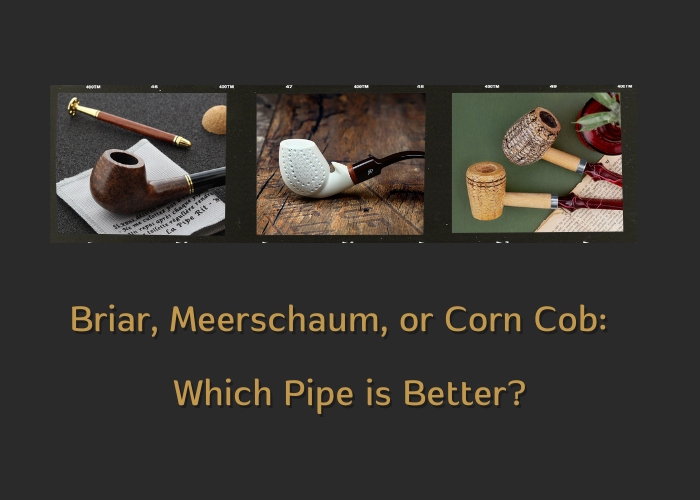
Briar, Meerschaum, or Corn Cob: Which Pipe is Better?
If you have ever asked yourself, "Which type of pipe is better?"—choosing between the classic Briar, the purity of Meerschaum, or the value of a Corn Cob—this article provides the answers. We will compare these materials to show how each affects flavor and which best suits your lifestyle.
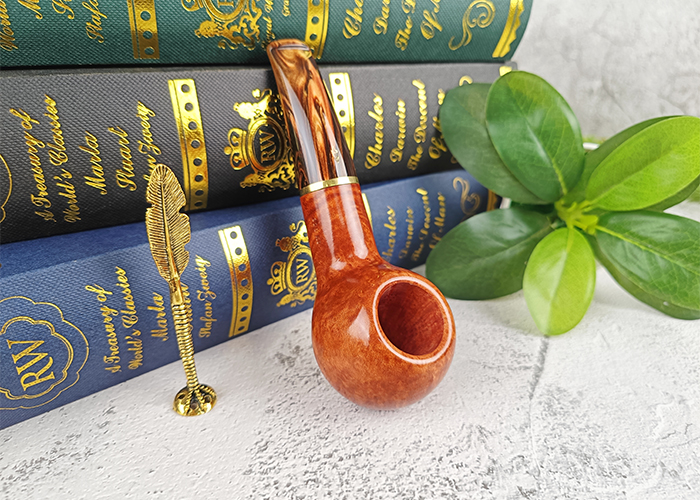
Why Briar is Often Considered the Better Pipe for Collectors
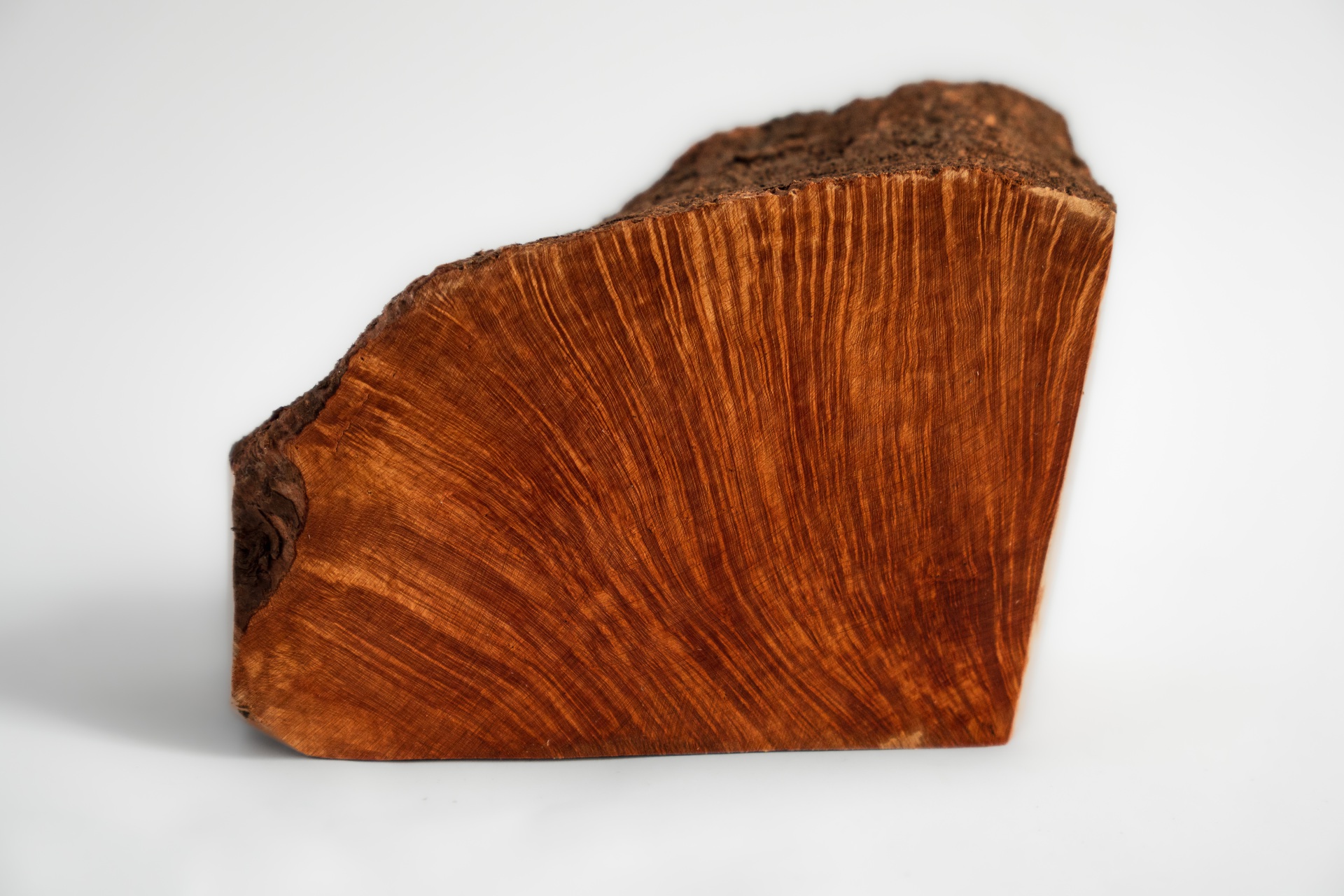
When it comes to smoking pipes, Briar has been the industry standard for centuries. It is crafted from the root burl of the Heath tree (Erica arborea), primarily found in the Mediterranean region.
Why Briar?
Briar is no ordinary wood; it is "tempered" by nature with unique properties:
- Heat Resistance: Because the burl must store water and nutrients in arid climates, the wood is incredibly dense and heat-resistant. It does not burn easily when exposed to tobacco embers.
- Moisture Absorption: Despite its toughness, Briar is naturally porous. This helps absorb moisture and tar from the tobacco, resulting in a smoke that is smooth and not overly humid.
Why do many say Briar is the best?
- Superior Durability: It is highly heat-resistant, sturdy, and won't shatter if dropped (unlike Meerschaum).
- Grows Beautiful with Age: As you smoke it, the heat and oils from your hands highlight the grain, making it look more dimensional and beautiful over time.
- Value Appreciation: Briar pipes from famous artisans often increase in value over time.
- Caution: Briar can suffer from "Ghosting"—where the scent of previous tobaccos lingers in the wood—which can affect the flavor if you frequently switch between different types of blends.
Maintenance Tips for a Long-Lasting Briar Pipe
- Breaking-in: Initially, you should smoke to build a thin layer of carbon (Cake) inside the bowl to protect the wood from burning and help absorb heat.
- Resting: Briar needs time for absorbed moisture to evaporate. Rest it for at least 24 hours between smokes. This is why enthusiasts often have a "rotation" of several pipes.
- Cleaning: Use a Pipe Cleaner to clear the airway after every use to prevent oil buildup, which can cause a bitter taste in future smokes.
Meerschaum vs. Briar: Which Pipe is Better for Purity?
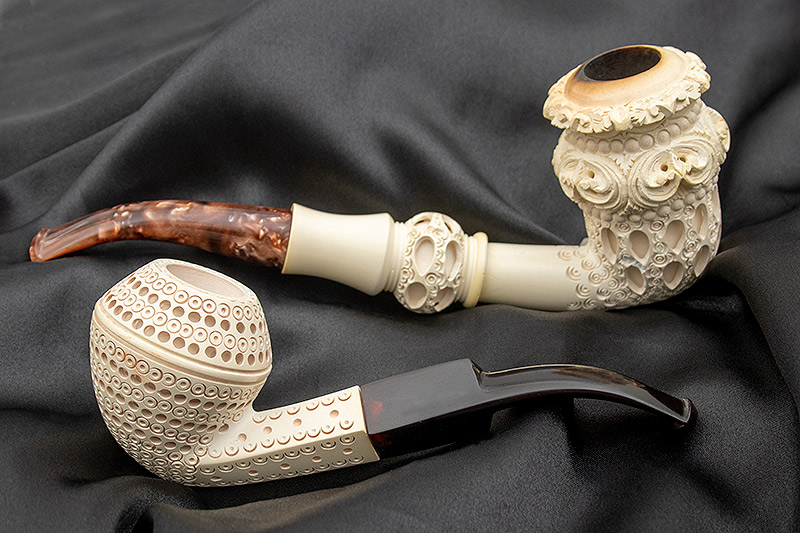
- If Briar is the king, Meerschaum is the "Art" that true connoisseurs dream of. The word Meerschaum is German for "Sea Foam," referring to a lightweight, white mineral that can almost float on water. Scientifically known as Sepiolite, the world's finest deposits are found in Eskisehir, Turkey.
Why is it called the "Purest Pipe"?
The secret lies in its highly porous molecular structure:
- Unadulterated Flavor: Meerschaum has no scent or taste of its own and, importantly, it does not burn like wood. You get 100% of the tobacco's pure flavor. Tobacco tasters often use Meerschaum pipes to test new blends.
- Excellent Heat and Smoke Management: Its porosity acts as a "natural filter," absorbing moisture and oil. This makes the smoke dry, cool, and smooth, greatly reducing "Tongue Bite."
- Less Rest Required: Because it is a mineral and not wood, it doesn't hold moisture as long. You can smoke a Meerschaum pipe several times a day (as long as it doesn't get too hot), whereas Briar requires a full day of rest.
The Magic of the Coloring Process
Collectors love Meerschaum for its Patination. As you smoke, nicotine and tobacco oils are absorbed into the mineral, reacting with the Beeswax coating to change the pipe's color:
- Early Stage: White turns to cream or ivory.
- Middle Stage: Transitions to gold, amber, or honey.
- Final Stage: Becomes a deep reddish-brown or rich cherry.
- Uniqueness: Every pipe colors differently based on the tobacco you use, how you hold it, and how often you smoke, making it a one-of-a-kind piece of art reflecting its owner's history.
Summary of Meerschaum's Superiority:
- Consistent Flavor: It doesn't ghost or absorb old scents.
- Dry and Cool Smoke: Excellent moisture absorption prevents tongue bite.
- Exquisite Craftsmanship: Often intricately carved into faces, animals, or elaborate shapes.
Caution
Meerschaum is similar to ceramic or clay; its care is different from wood:
- Beware of Drops: If Briar falls, it might dent; if Meerschaum falls, it shatters instantly.
- Never Tap Against Hard Objects: To empty ash, do not tap it against a table or ashtray. Use a pipe tool to gently scrape it out.
- Temperature Sensitivity: Never clean a Meerschaum pipe with water or alcohol while it is still hot, as it may cause the mineral to crack.
Corn Cob: Is it a Better Pipe Option for Beginners?
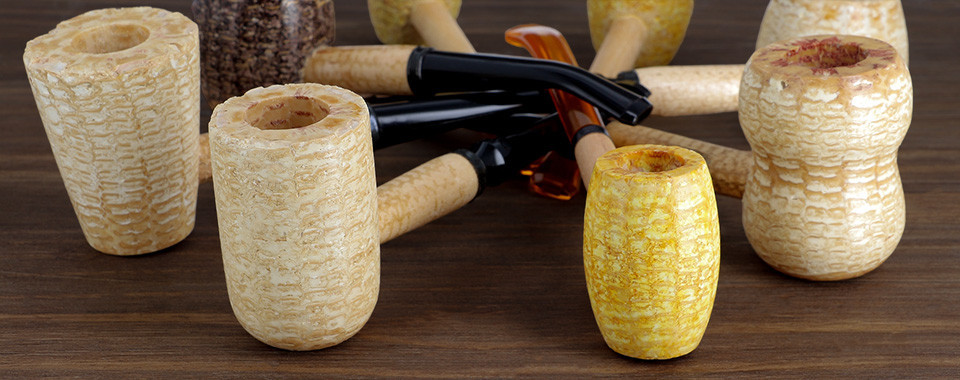
You might wonder how a pipe costing only a few hundred baht can compete with those costing thousands. In reality, the Corn Cob is the secret weapon of pro smokers and a symbol of traditional American "down-to-earth" culture. Icons like General Douglas MacArthur and Mark Twain were famously inseparable from their corn cob pipes.
Not just any corn can be a pipe
High-quality pipes, particularly from the legendary Missouri Meerschaum, are made from a special corn variety developed over a century:
- Wood-like Core: This variety has a large, thick, and very dense cob. After being air-dried for two years, it becomes almost as strong as wood.
- Manufacturing: After drying, the cobs are hollowed, fitted with a stem, and coated with a special plaster for durability and fire resistance.
Why do "Experienced Smokers" still carry a Corn Cob?
- Perfect Sweetness: In the early stages, the cob releases a faint sweetness that pairs wonderfully with Burley or Aromatic blends.
- Great Ventilation: Its naturally porous structure dissipates heat and absorbs moisture exceptionally well. Corn cobs are often the "easiest" and "coolest" smoking pipes.
- The Tester Pipe: Many use cobs to test new blends. If the flavor is bad or the "ghosting" is too strong, you can toss the pipe without regret.
Simple Maintenance
- Don't pull the stem while hot: This can loosen the joint or cause cracks.
- Cake is a Shield: Allowing a thin layer of carbon cake to build up will extend the cob's life by years.
Who is a Corn Cob best for?
- Beginners: It’s the best pipe to practice your "smoking rhythm" because it handles frequent relights and moisture issues (gurgling) well.
- Travelers and Adventurers: Perfect for places where you might lose or damage it, like in the woods or on a boat.
- Sweet Tobacco Lovers: It highlights the natural sweetness of the leaf.
Choosing the "Right" Pipe for You
There is no "best" material, only the material that fits your timing and needs:
- If you want a "Long-term Companion" that reflects your taste through wood grain—Choose Briar.
- If you want "Flavor Purity" and love watching a piece of art change color by your own hand—Choose Meerschaum.
- If you want "Simple Relaxation" without financial worry and a naturally sweet smoke—Choose a Corn Cob.
For many, the "first pipe" isn't the "only pipe." The charm of this hobby is experimenting with different materials and different blends. If you have the chance, try all three—each has an undeniable charm of its own!
References:
- Missouri Meerschaum Company. "The History of Corn Cob Pipes."
- Smokingpipes.com (Pipe Line). "Briar vs. Meerschaum vs. Corn Cob Pipes: What Makes Them Different?" By Chris Herath and Andy Wike (April 2026).
- Pipedia (Encyclopedia of Pipes and Tobaccos). "Briar Pipe Material & Meerschaum Mining."
- Peterson of Dublin. "The Craft of Pipe Making."